Norwex BAMBOO Microfiber Cloth partners great with so many other Norwex products for windows, bathrooms,…




What Is the Best Cleaning Cloth? No-Nonsense Comparison Guide
If you’ve ever stood in the cleaning aisle staring at dozens of options—paper towels, sponges, microfiber cloths—you’re not alone. I get this question all the time: “What is actually the best cleaning cloth?”
And the truth is… most people aren’t struggling because they don’t have enough options. They’re struggling because they don’t know what is BEST. There are so many factors to consider so you have the best results on all fronts.
What Makes a Cloth “The Best Cleaning Cloth”?
Before comparing brands or types, we need to define what “best” actually means.
In my experience, the best cleaning cloth should:
- Remove dirt, grease, and bacteria effectively
- Require minimal or no chemical cleaners
- Be reusable and long-lasting
- Leave surfaces clean—not smeary or residue left behind
A great cleaning cloth doesn’t move dirt around—it REMOVES it.
The Most Common Types of Cleaning Cloths or Products
Next, let’s break this down simply.
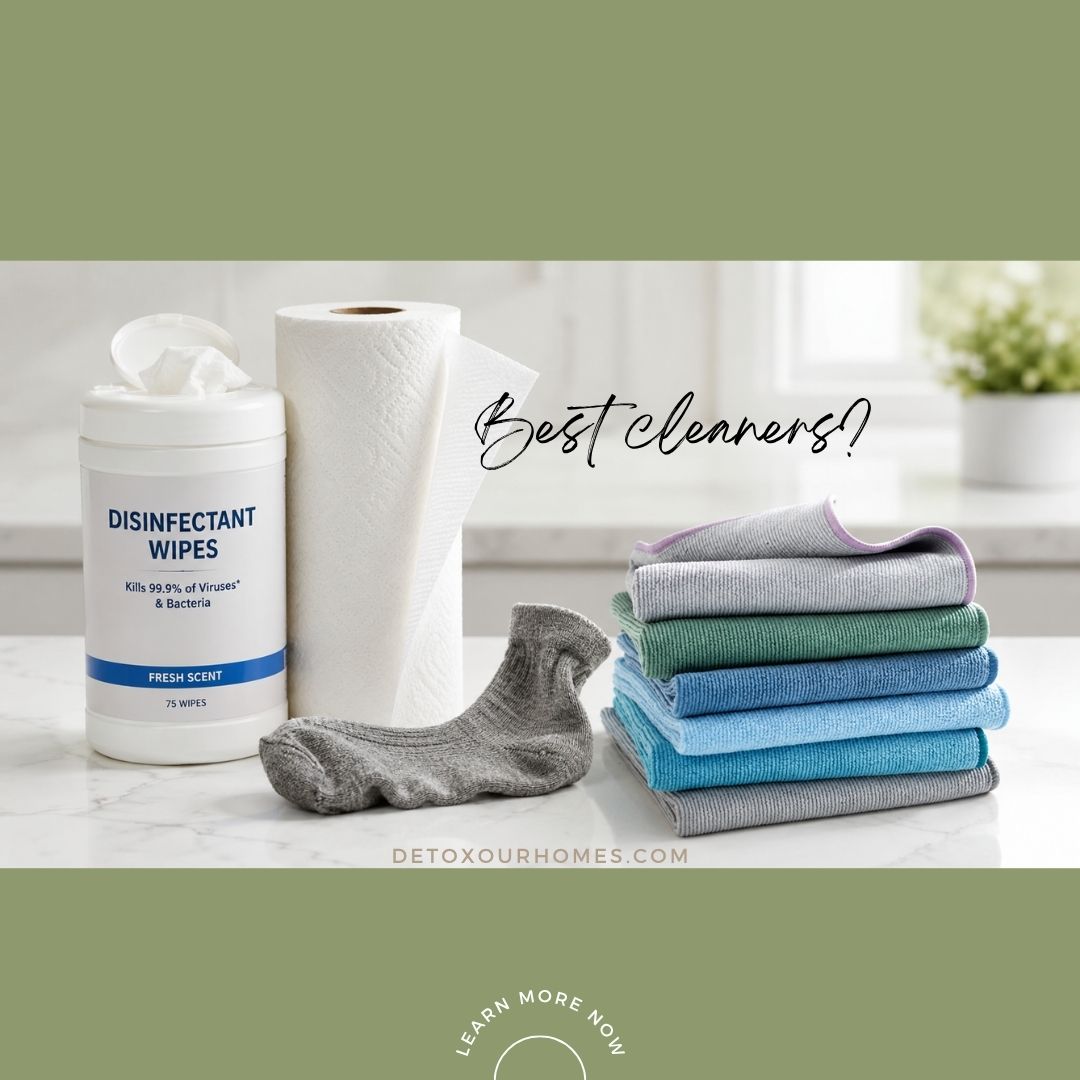
1. Paper Towels
- Disposable (I call these “CA$H in the TRA$H” because you use it and throw it)
- Often used with chemical cleaners
- Tend to push dirt around rather than remove it
Biggest downside:
Creates ongoing cost and waste.
2. Cotton Rags
- Reusable
- Semi-absorbent
- Cheap (i.e. using old socks, etc)
But:
- Not able to trap fine particles (the fibers are simply TOO big to be able to pick up the yuck)
- Often spread bacteria rather than remove it
- To “clean”, still need to use a “cleaner” of some sort
3. Disinfectant Wipes
- Convenient and quick to grab
- Pre-saturated with cleaning and disinfecting chemicals
- Designed to kill certain bacteria and viruses when used correctly
But here’s what most people don’t realize:
- They must remain visibly wet on a surface for a specific amount of time (often several minutes)
- Most people use one wipe across multiple surfaces, reducing effectiveness
- They focus on killing, not necessarily removing contaminants
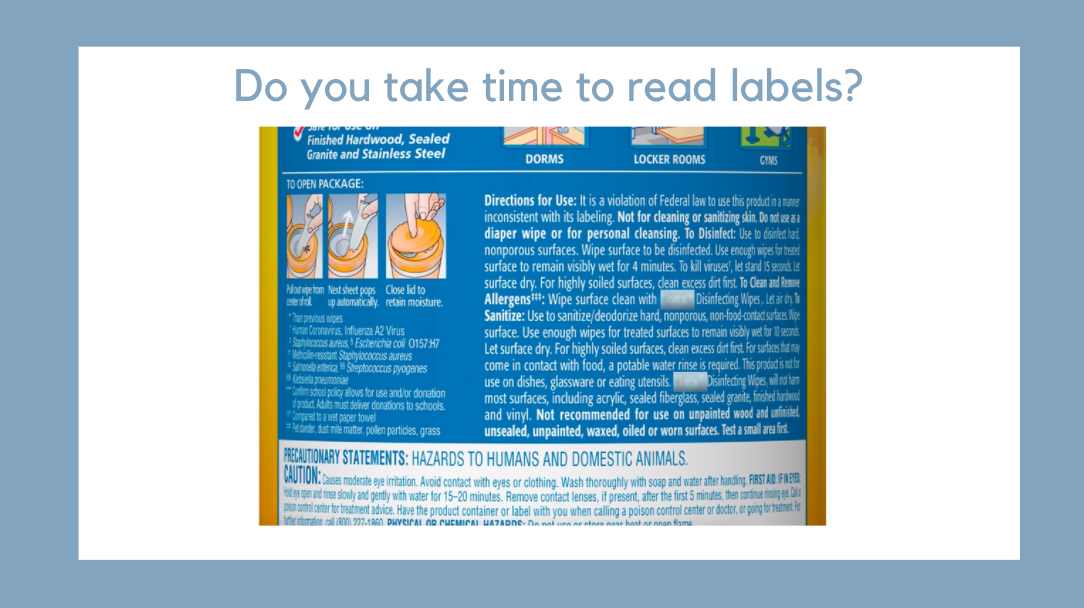
In real life:
- Most people wipe too quickly (do not leave in contact long enough)
- Not enough product used (one wipe should not be used for multiple surfaces)
- Not left wet long enough (to keep it visibly wet for required contact time)
? Which means, they often aren’t being used in a way that actually disinfects as intended.
What they can leave behind:
- Chemical residue
- Dead bacteria and debris
- A surface that feels clean—but may not be fully cleared
4. Standard Store-bought Microfiber
Microfiber is designed to:
- Pick up smaller particles
- Improve cleaning performance
But here’s the catch:
Not all microfiber is created equal. Have you purchased store-bought microfiber and found it worked pretty well when it was brand new… but that it degraded quickly?
A lot of my clients hated “microfiber” because of texture issues… and to be honest, I was in that camp. I hated the feel of “microfiber”. I did not yet understand that quality was critically important.
Best Cleaning Cloth: Why QUALITY Matters
This is one of the biggest misconceptions I see.
Most people assume:
“Microfiber is microfiber.”
It’s not.
Higher-quality microfiber has:
- More densely packed fibers
- Finer fiber and more splits to physically remove the “yuck” on your surfaces
- Greater ability to lift and trap contaminants
- FEELS so much different (for all you texture-sensitive peeps like me)
In my experience, the difference between average and high-quality microfiber is not subtle—it’s significant.
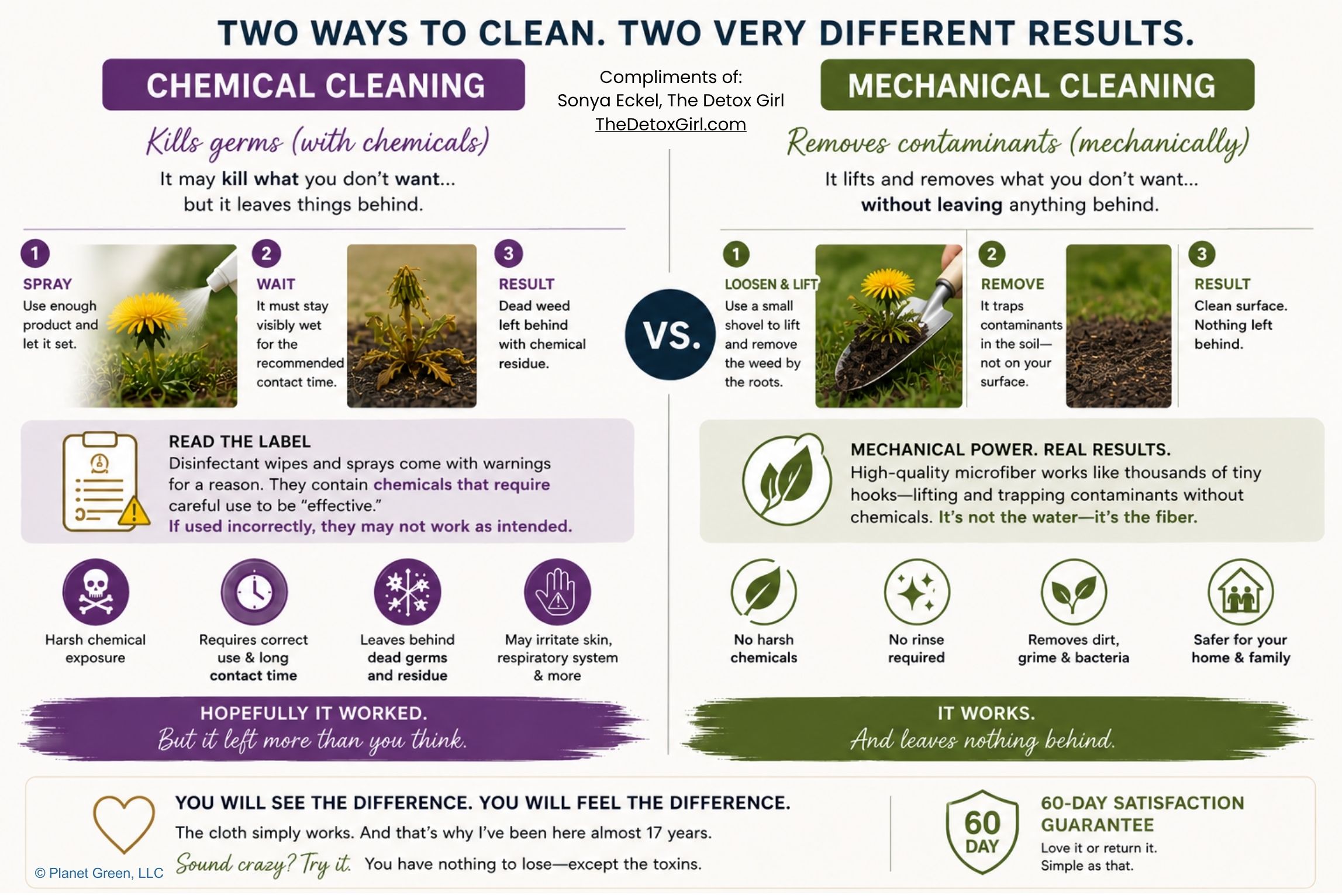
Chemical Cleaning vs. Mechanical Cleaning
This is where everything shifts. I covered this more in depth in my earlier article.
Most commonly, typical cleaners rely on:
Chemical Cleaning
- Uses products to kill bacteria
- Requires proper usage (amount + contact time)
- Often leaves behind residue
Mechanical Cleaning
Mechanical cleaning works differently. Instead of killing contaminants (and leaving chemical residue behind), it:
- Physically removes them from the surface
- Traps them within the cloth
When you remove something, it’s no longer sitting on your surface.
That’s a completely different outcome.
In case you feel confused, if you like analogies, I put together my “weed” analogy graphic for you.
OK, so what Is the Best Cleaning Cloth?
Here’s my honest answer:
The best cleaning cloth is one that removes contaminants effectively with minimal reliance on chemicals (preferably JUST WATER!)—and does it consistently and predictably. It is something you can clean with having absolute confidence it’s keeping your home, your loved ones, your fur babies… safe and healthier.
So, for most homes, that means:
- A high-quality microfiber cloth
- Used properly
- With water (or safe product for certain specialty cleaning challenges)
- Silver-embedded is a huge bonus if it is microsilver (not nano-silver)
What I Recommend (Based on Real Use)
After years of testing different methods in real homes, I’ve found that:
A well-designed microfiber system can replace the majority of traditional cleaning products. And the highest quality I have discovered so far is Norwex. It has changed my life. It has made cleaning SO much easier, and based on the demo below, I have more confidence cleaning with Norwex than I do using disinfectants.
And, that’s not theory—that’s practical, everyday use. I speak for my thousands of satisfied customers AND for the Eckel family! Here’s a little demo that I did in my own kitchen… and I have done this same comparison hundreds of times.
Final Thoughts
If you’re trying to simplify your cleaning routine, don’t start by asking:
“What product do I need next?”
Start by asking:
“What actually works—and why?”
Because once you understand that… Everything gets simpler.
About Me
I’m Sonya Eckel, also known as The Detox Girl. In my almost two decades as a Norwex leader, I help families simplify their cleaning routines and reduce unnecessary chemical exposure by using practical, effective systems that work in real homes. In my experience, the key isn’t using more products—it’s understanding how to clean better with less.

Leave a Reply
You must be logged in to post a comment.